
Gallstones and Emergency Situations
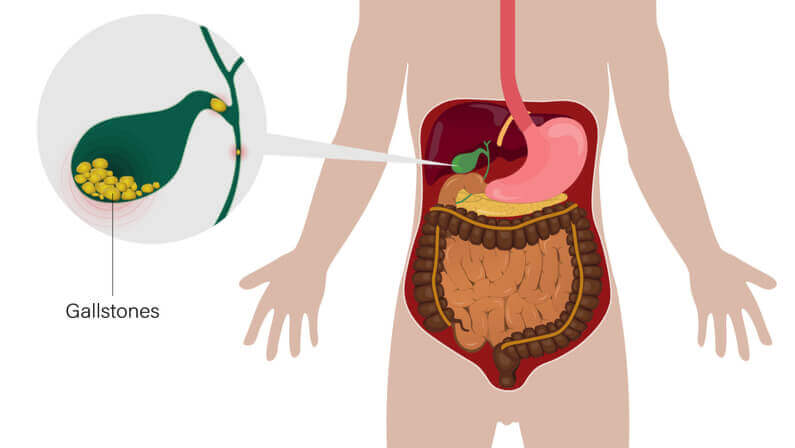
Your gallbladder is a small pouch located under your liver. It holds bile, a fluid that assists in breaking down fats from the food you eat. Occasionally, tiny stones, known as gallstones, can develop inside the gallbladder. Many people are unaware of having gallstones. However, for others, these stones can cause discomfort or obstruct the flow of bile, potentially resulting in sudden and severe issues.
This section will explore the reasons behind gallstones, how to recognise potential warning signs and what steps you can take to maintain your well-being.
Gallbladder/Gallstones Disease Emergencies
Why Do Gallstones Form?
Gallstones happen when the components in bile stick together and harden. Here are some things that might increase the chances of this happening:
• The body makes too much cholesterol, which can clump together to form stones.
• There is a build-up of bilirubin, a natural waste product from blood cells.
• The gallbladder doesn’t empty properly, allowing bile to sit and form stones.
• Weight changes, especially if you gain or lose weight quickly.
• Family history or certain hormones, such as pregnancy, hormone replacement therapy or contraceptive pills.
• Eating foods high in fat and sugar regularly.
Think of gallstones as small pebbles that form in a pond that isn’t stirred often enough—eventually, they get in the way and cause trouble.
What Symptoms Might I Notice?
Most gallstones are harmless, but if they get stuck and block the flow, they can cause some discomfort.
Here are some common signs:
• Pain in the upper right side of your tummy
• Pain that spreads to your shoulder blade or back
• Feeling sick, nauseous or vomiting
• Feeling bloated or heavy, especially after eating fatty foods
These symptoms usually come in waves and might go away once the blockage moves.
Emergency Symptoms – Don’t Ignore These
If you experience any of these, please seek urgent medical attention by calling 999 or visiting A&E:
⚠️ Severe pain that persists for more than a couple of hours
⚠️ Fever, chills or shaking—this could indicate an infection
⚠️ Yellowing of the skin or eyes (jaundice)
⚠️ Dark urine or very pale stools
⚠️ Persistent vomiting
These symptoms might be caused by gallstones and could lead to:
• Acute cholecystitis—an inflamed gallbladder
• Blocked bile ducts—stones that are preventing bile from flowing
• Pancreatitis—inflammation of the pancreas
These conditions can become serious if not treated promptly.
How Are Gallstone Problems Diagnosed?
Your doctor might do a few things to help you:
- They could take some blood tests to see if you have an infection or if your liver is functioning properly.
- They might do an ultrasound, which is painless and can help spot stones.
- If necessary, they could use special scans like MRCP or CT.
- Sometimes, they might use a procedure called ERCP, which uses a camera to look inside and can remove stones while they are doing it.
Treatment Options
To ease the pain, we often start with painkillers and medication, especially when an attack hits. Antibiotics might be prescribed if there is an infection.
For a lasting solution, the best option is:
Gallbladder removal surgery (laparoscopic cholecystectomy)
- Performed using small cuts with keyhole instruments
- Most patients are back home the same day
- You can lead a normal life without your gallbladder
- Digestive issues usually get better or vanish
If stones are lodged in the bile duct, an endoscopic procedure (ERCP) might be used to remove them before or instead of surgery.
Can I Prevent Gallstones?
Yes, making a few simple lifestyle changes can really help keep your gallbladder in good health:
🥗 Opt for a balanced diet
Try to include more fruit, vegetables and whole grains, and cut down on fried foods and fatty meats.
⚖️ Maintain a stable weight
Rapid weight loss can increase the risk of stones, so it’s best to avoid extreme diets.
🚶♂️ Get moving
Try to get at least 30 minutes of exercise most days.
💧 Drink plenty of water
It helps your body process bile more easily.
⏱ Eat regular meals
Skipping meals can disrupt bile flow and encourage stones to develop.
When Should I Speak to My GP?
If you experience:
- Tummy pain that comes back after eating
- Digestion that seems to get worse as time goes on
- Jaundice, a fever or pain that keeps coming back
Please see your doctor about this. It is much easier to treat gallstone issues when they are caught early