
Hernias are common and often harmless — but they can sometimes lead to serious problems. This guide explains what to watch for, when to seek help, and what treatment involves.
Hernia Emergencies
What is a hernia?
A hernia happens when part of an internal organ or fatty tissue pushes through a weak spot in the surrounding muscle or abdominal wall. You may notice a lump or bulge, often with some discomfort — especially when coughing, bending, or lifting.
Common triggers include:
- Lifting heavy objects or straining too much
- Chronic coughing (e.g. from smoking or lung problems)
- Pregnancy and childbirth
- Being overweight
- Previous abdominal surgery
- Getting older and losing muscle strength
- Constipation and repeated straining
- A family history of hernias

Types of hernia
Inguinal
Groin hernia
The most common type. A bulge appears in the groin or inner thigh.
Umbilical
Belly button hernia
Tissue pushes through near the navel. Can affect adults and babies.
Ventral
Abdominal wall hernia
A bulge anywhere on the front of the abdomen.
Incisional
Surgical wound hernia
Develops at the site of a previous abdominal operation.
Hernia Complications: What You Need to Know
Most hernias cause nothing more than mild discomfort or a visible bulge. But in some cases, hernias can lead to serious complications that need urgent medical attention. Knowing the warning signs can help you get help quickly if something goes wrong.
A. Incarceration (A “Trapped” Hernia)
What it means
Normally, the tissue or bowel that bulges through a hernia can be gently pushed back in, or it slides back on its own. When it gets stuck outside the muscle wall and won’t go back in, this is called incarceration.
Signs to watch for
- Constant pain where the hernia is
- A firm lump that stays put, even when you lie down
- Nausea or vomiting
- A bloated tummy
- Just generally feeling unwell
Why it matters
If a piece of bowel is trapped, it can lose its blood supply very quickly. This is called strangulation, and it’s a medical emergency. If you notice these symptoms, seek medical care straight away.
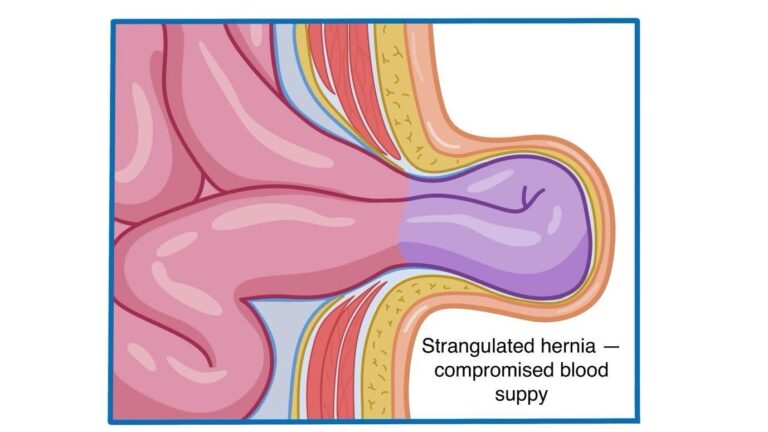
B. Strangulation (Blood Supply Cut Off)
What it means
This happens when the trapped tissue loses its blood supply. Without blood flow, tissue can die within hours. This is a surgical emergency and needs immediate treatment.
Signs to watch for
- Severe pain that doesn’t ease up
- Redness or dark, discoloured skin over the hernia
- Fever
- A fast heartbeat
- Vomiting
- The hernia is very tender to touch and cannot be pushed back in
Why it matters
Left untreated, strangulation can lead to the affected bowel tissue dying, infection, and sepsis (a life-threatening reaction to infection). This is one of the few true surgical emergencies in hernia care.
If you have these symptoms, go to your nearest emergency department or call emergency services right away. Don’t wait to see if it improves.
C. Bowel Obstruction
What it means
Sometimes a loop of bowel inside the hernia becomes blocked, stopping digestion from moving through normally.

Signs to watch for
- Cramping pain in the abdomen
- Vomiting
- A swollen, tight-feeling abdomen
- Being unable to pass wind or have a bowel movement
This also needs prompt medical assessment, as it can be linked to incarceration or strangulation.
D. Skin Changes or Ulceration
What it means
Hernias that are large or have been present for a long time can put ongoing pressure on the skin covering them. Over time, this pressure can cause the skin to break down or form an ulcer (an open sore).

This is less of an emergency than the complications above, but it’s still a good reason to have your hernia assessed, since it usually means the hernia has grown or been left untreated for some time.
Treatment options
Watchful waiting
If your hernia is small, painless, and low-risk, careful monitoring with regular check-ups and lifestyle adjustments may be all that is needed.
Planned (elective) repair
Recommended if the hernia is growing, causing pain, or limiting daily life. Can be open or keyhole surgery, often using mesh to strengthen the area.
Emergency surgery
Required when the hernia is strangulated, bowel is obstructed, or there is severe pain or vomiting that cannot wait.
When to seek urgent help
⚠ Go to A&E or call 999 immediately if you notice any of the following:
These could mean the hernia is trapped or its blood supply is being cut off. |
Tips to reduce your risk
Simple steps that can help:
|
Why Mr. Spyros Panagiotopoulos?
Mr Spyros Panagiotopoulos is a leading consultant in General and Metabolic/Bariatric Surgery at King’s College Hospital in London. He has extensive experience handling various general surgery emergencies, ensuring patients receive thorough care and safe, evidence-based treatment.