
Bowel obstruction refers to a situation where the small intestine becomes blocked, preventing normal passage of food and digestive fluids. This complication can arise following gastric bypass, sleeve gastrectomy, or any abdominal surgery
Bowel Obstruction After Bariatric and Metabolic Surgery
Causes of Bowel Obstruction
- Internal hernias
- Twisting of the bowel (volvulus)
- Scarring or adhesions
- Narrowing at surgical join points
- Rarely, blocked segments of intestine due to swallowed objects or strictures
Symptoms
- Crampy abdominal pain
- Vomiting, which may be severe
- Inability to pass gas or stool
- Abdominal bloating
- Rapid heart rate
- Severe or worsening pain (which is a medical emergency)
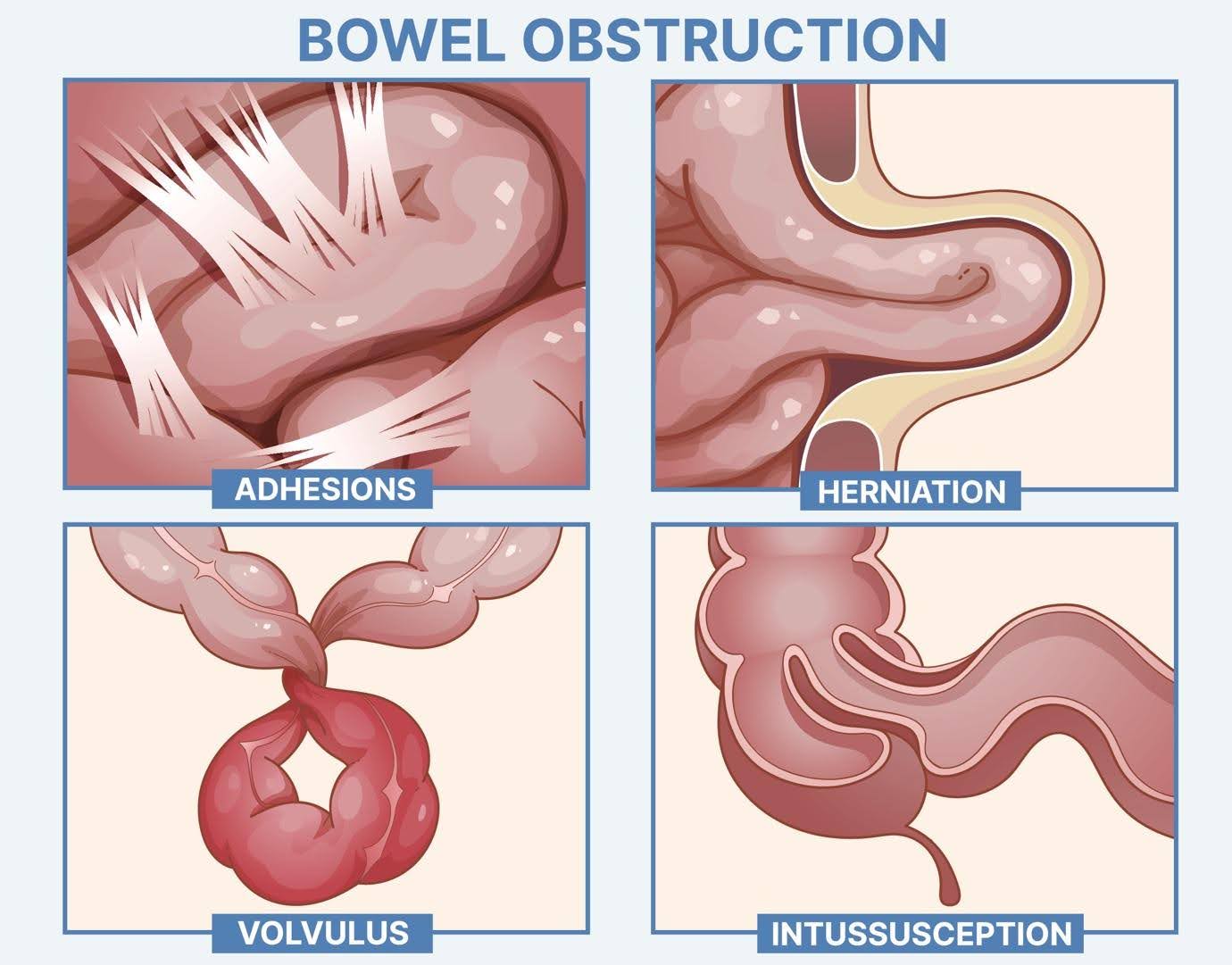
Why Bowel Obstruction Is Serious
If left untreated, a bowel obstruction can cut off the blood supply to part of the intestine. This may lead to bowel death and severe infection, making prompt medical attention crucial.
Diagnosis
- CT scan of the abdomen
- Blood tests to detect inflammation or dehydration
- Physical examination
Treatment
- Admission to hospital
- Fluid replacement therapy
- Insertion of a nasogastric tube to relieve pressure
- Surgery may be necessary to resolve the blockage
When to Seek Urgent Medical Help
Immediate medical attention should be sought if any of the following occur:
- Severe or persistent abdominal pain
- Repeated vomiting
- Inability to keep fluids down
- Chest pain or difficulty swallowing
- High fever
- Bleeding, such as vomiting blood or passing black stools
- Sudden return of hunger or loss of restriction with a gastric band
- Signs of infection at a port or surgical site
Key Takeaways
- Bariatric surgery is generally considered safe, but complications can arise even years after the procedure.
- Early recognition of symptoms is essential for successful treatment.
- If unsure, always seek medical advice, especially regarding abdominal pain, vomiting, or changes in eating tolerance.
Why Mr. Spyros Panagiotopoulos?
With extensive experience in metabolic/bariatric and emergency surgery, Mr Panagiotopoulos provides expert, evidence-based care in postoperative complications to ensure optimal outcomes.