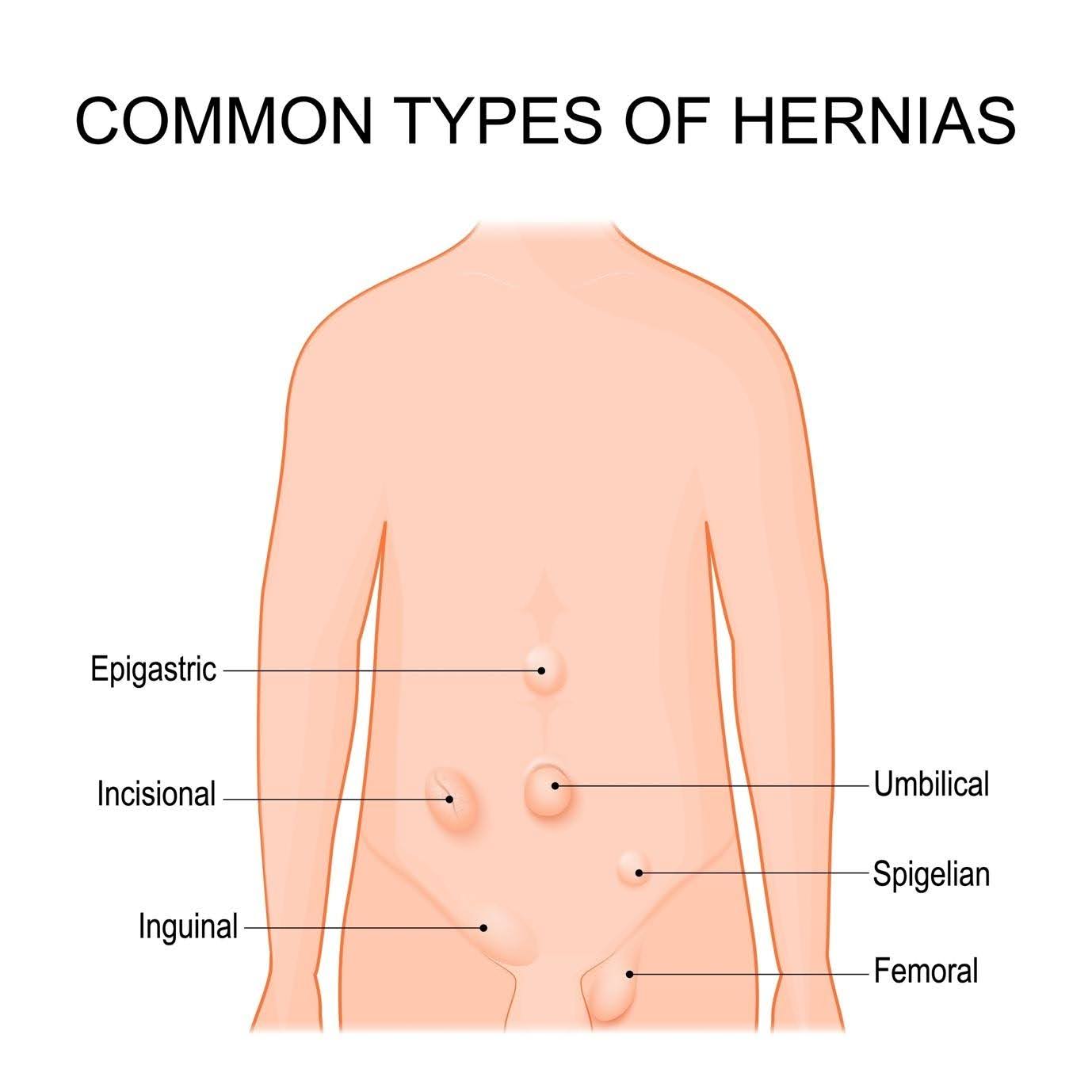
Causes and Risk Factors
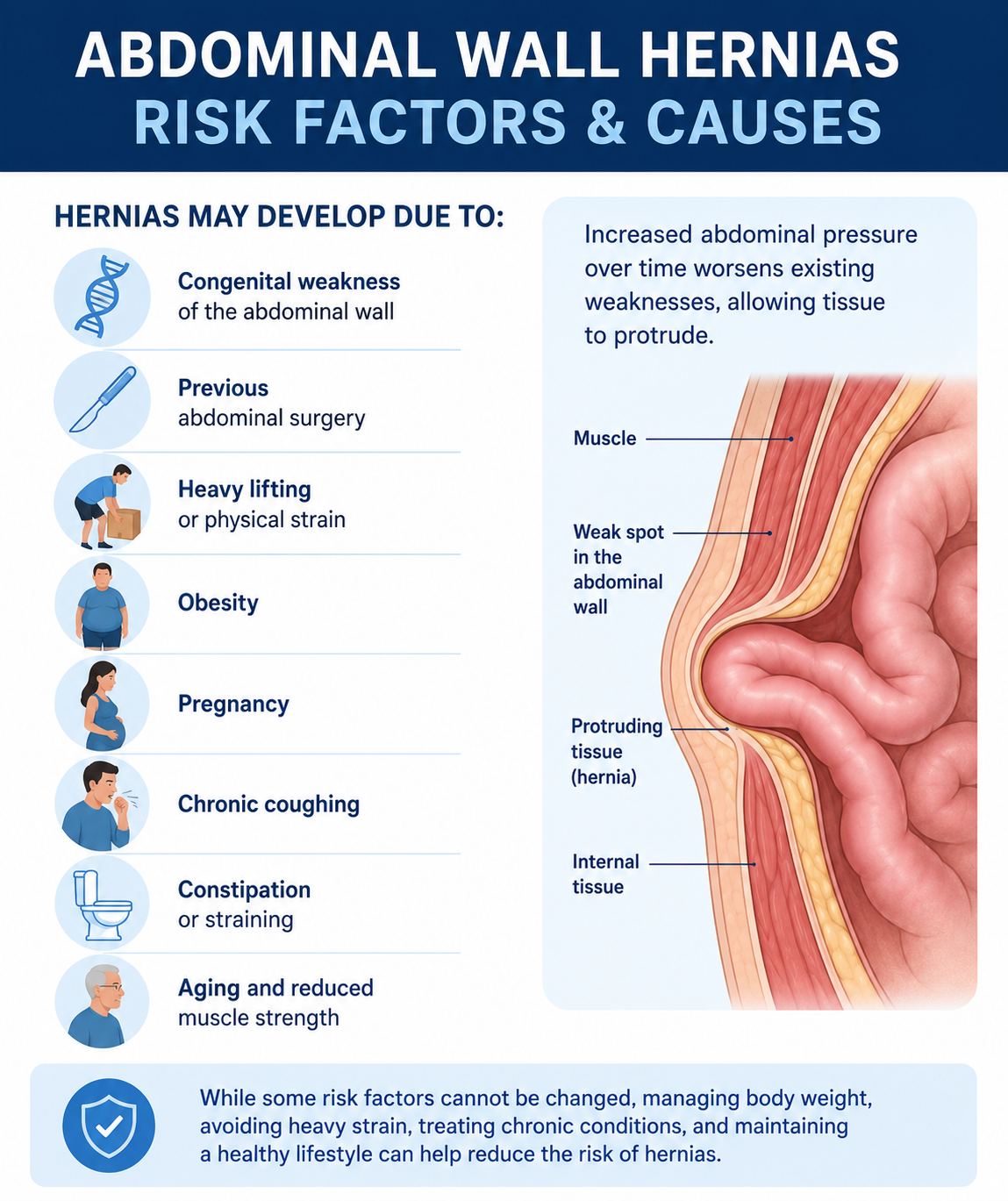
Hernias may develop due to:
- Congenital weakness of the abdominal wall
- Previous abdominal surgery
- Heavy lifting or physical strain
- Obesity
- Pregnancy
- Chronic coughing
- Constipation or straining
- Aging and reduced muscle strength
Increased abdominal pressure over time worsens existing weaknesses, allowing tissue to protrude.
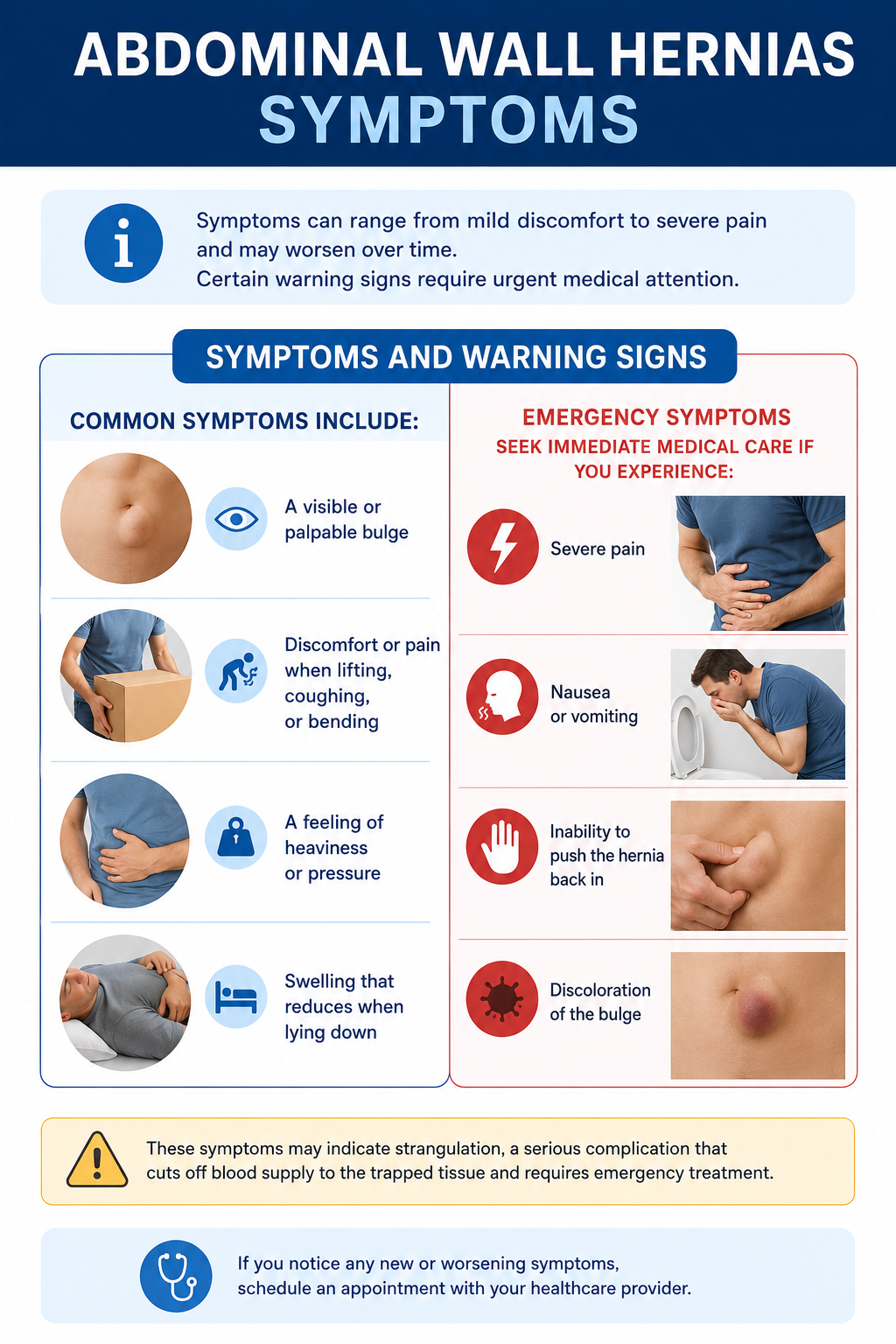
Symptoms can range from mild discomfort to severe pain and may worsen over time. Certain warning signs require urgent medical attention.
Symptoms and Warning Signs
Common symptoms include:
-
A visible or palpable bulge
-
Discomfort or pain when lifting, coughing, or bending
-
A feeling of heaviness or pressure
-
Swelling that reduces when lying down
Emergency symptoms include severe pain, nausea, vomiting, inability to push the hernia back in, or discoloration of the bulge, which may indicate strangulation.
Untreated hernias may lead to serious and potentially life-threatening complications. Early intervention significantly reduces these risks.
Potential Complications if Left Untreated
-
Incarceration – Hernia contents become trapped and cannot be repositioned.
-
Strangulation – Blood supply is cut off, leading to tissue death; this is a surgical emergency.
-
Bowel obstruction – Particularly in large or longstanding hernias.
Accurate diagnosis is typically straightforward and may involve imaging when needed to confirm complexity or complications.
Diagnosis of Hernias
Hernias are usually diagnosed through:
Surgery is the only definitive treatment for hernias. The choice of approach depends on hernia type, size, patient health, and previous operations.
Surgical Treatment Options
Open Hernia Repair
An incision is made directly over the hernia. The protruding tissue is returned to the abdomen, and the defect is closed with sutures or reinforced with mesh. This method is effective, especially for large or complex hernias, but may involve longer recovery.
Laparoscopic (Keyhole) Hernia Repair
This minimally invasive approach uses small incisions, a camera, and surgical instruments. A mesh is typically placed to reinforce the abdominal wall. Benefits include reduced pain, shorter hospital stay, and faster recovery.

Robotic-Assisted Hernia Repair
An advanced form of minimally invasive surgery offering enhanced precision, particularly useful for recurrent or complex hernias.
Recovery after hernia surgery is generally predictable, with most patients returning to normal activities within weeks.
Recovery and Aftercare
-
Hospital stay: same day or overnight in most cases
-
Light activity encouraged early
-
Avoid heavy lifting for 4–8 weeks
-
Pain usually managed with simple analgesics
-
Gradual return to work depending on occupation
Following post-operative instructions is essential to reduce recurrence and complications.
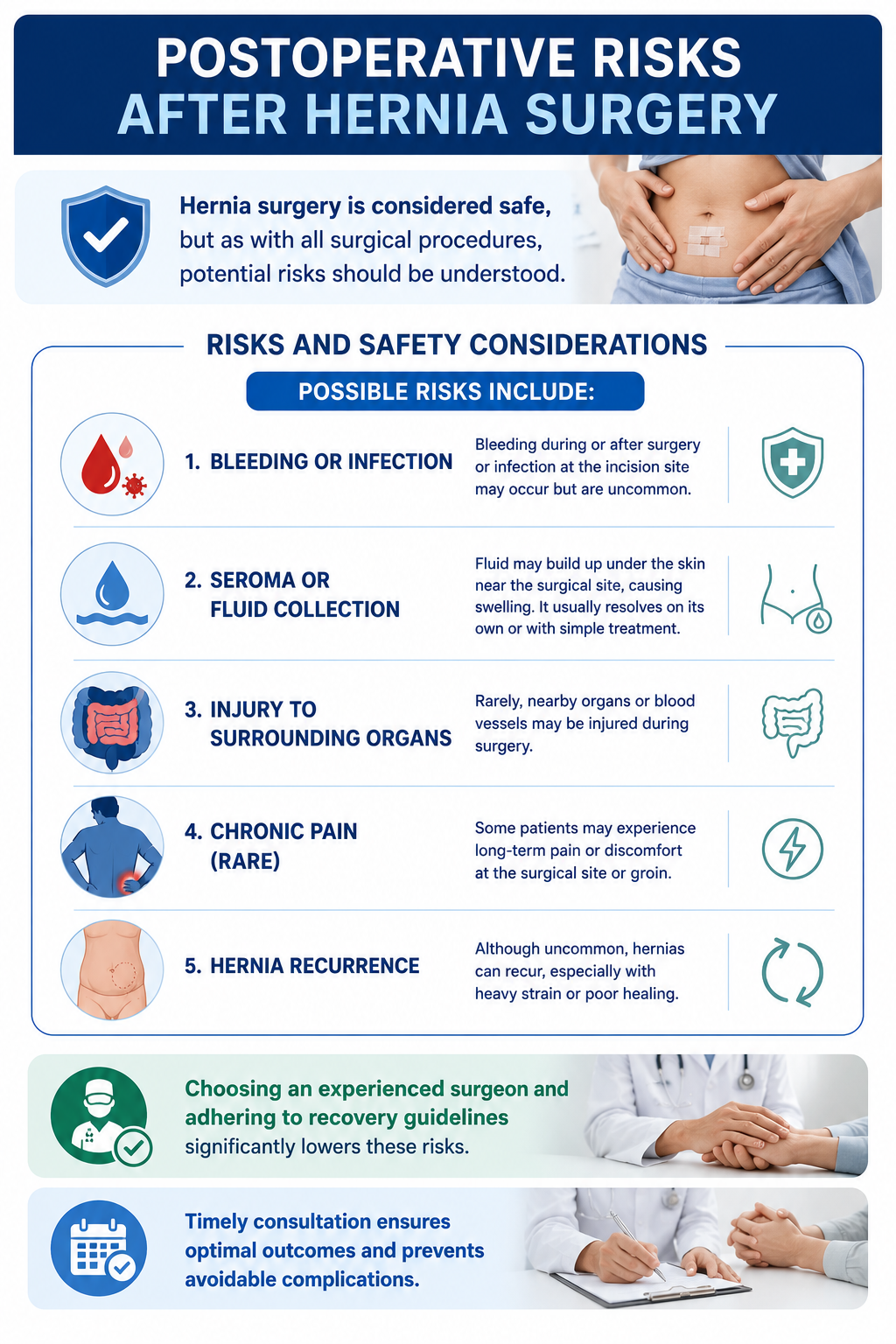
Hernia surgery is considered safe, but as with all surgical procedures, potential risks should be understood.
Risks and Safety Considerations
Possible risks include:
Choosing an experienced surgeon and adhering to recovery guidelines significantly lowers these risks.
Timely consultation ensures optimal outcomes and prevents avoidable complications.
When to Seek Medical Advice
You should seek medical assessment if:
-
A new or enlarging bulge appears
-
Pain or discomfort increases
-
You experience nausea, vomiting, or fever
-
The hernia becomes tender, firm, or discolored