Gastric Band Problems

Adjustable gastric bands were once a common weight loss surgery option, but many patients experience problems with them over time — sometimes years after their original surgery. If your band isn’t working the way it used to, or is causing new symptoms, you’re not alone, and there are effective solutions available.

Because of these issues, many people who had a gastric band fitted go on to need further treatment, whether that’s removing the band, adjusting it, or converting to a different type of weight loss surgery.

Common Problems with Gastric Bands

Some of the most frequent issues patients experience include:

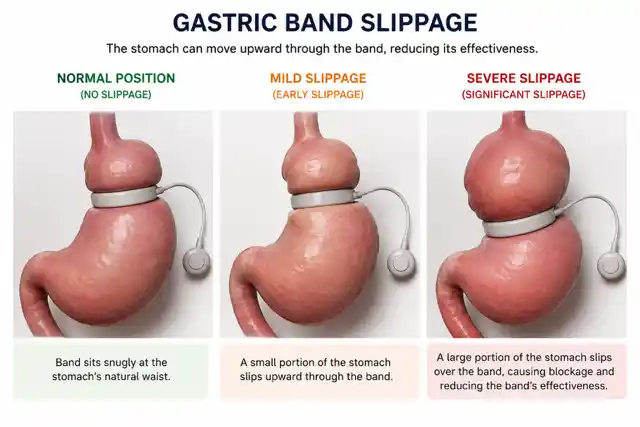
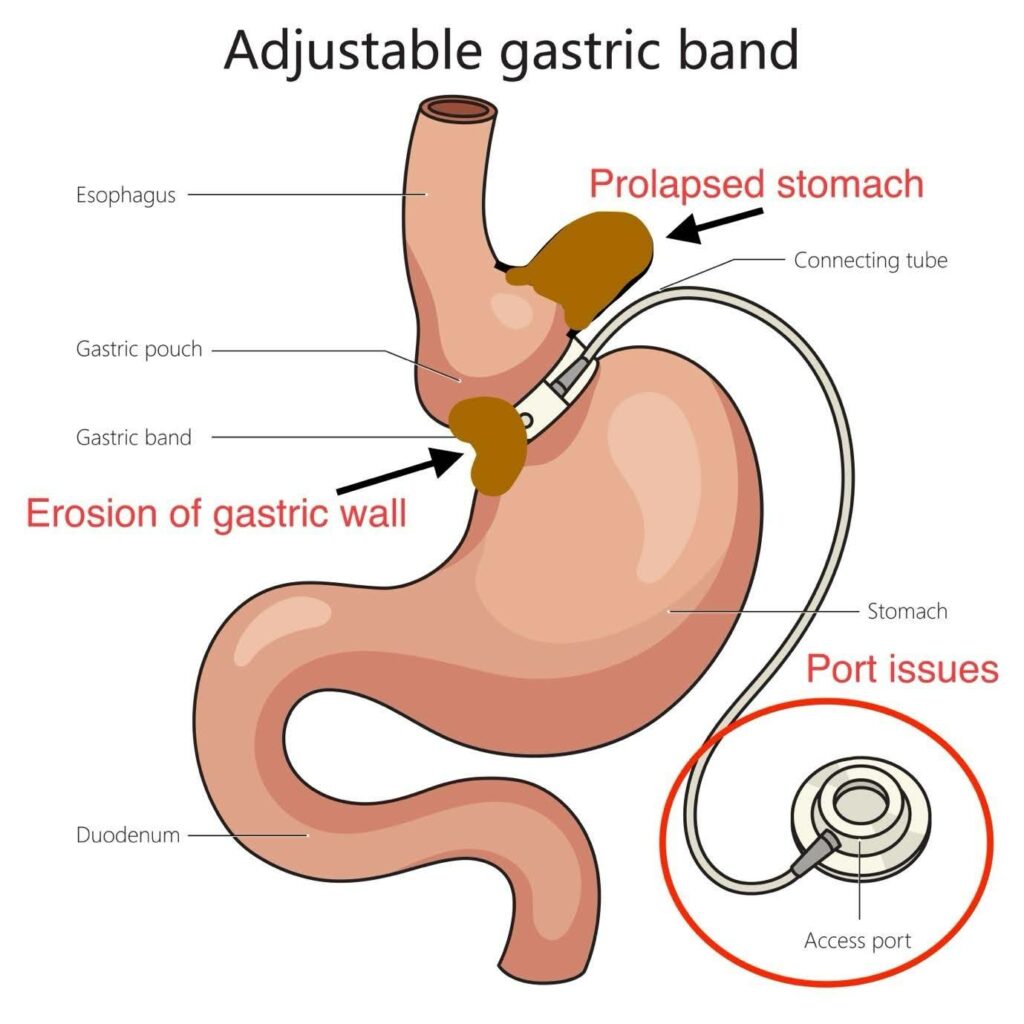
  • Band slippage – when the band moves out of its correct position
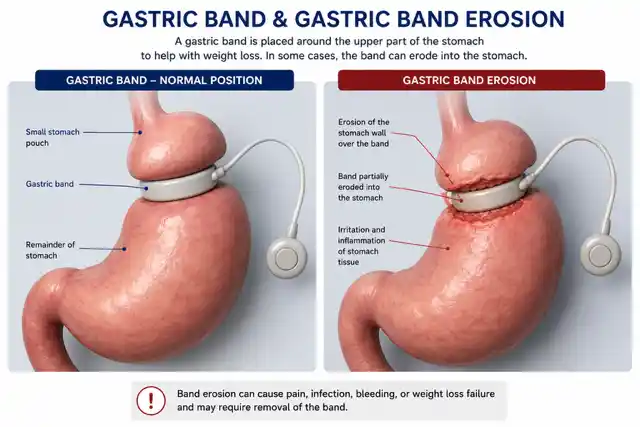
  • Band erosion – when the band gradually wears into the stomach wall
  • Trouble swallowing – food feeling stuck or slow to go down
  • Frequent vomiting or food intolerance – struggling to keep food down
  • Acid reflux or heartburn – a burning sensation that won’t settle
  • Port or tubing problems – issues with the small device under the skin used to adjust the band
  • Weight regain or limited weight loss – the band no longer controlling appetite effectively

These problems don’t tend to improve on their own. In fact, many get worse with time, which is why it’s important to seek advice if something doesn’t feel right, rather than waiting to see if it settles.

What Happens Next?

If you’re experiencing any of these symptoms, the good news is that treatment is usually straightforward. In most cases, this means having the band removed. Depending on your situation and goals, this can sometimes be combined with switching to another weight loss procedure, such as a gastric sleeve or bypass, in the same operation.

Every patient’s situation is different, so the right next step will depend on your symptoms, your band’s condition, and what you’d like to achieve going forward.

Gastric Band Slippage

Band slippage happens when part of the stomach slides upwards or downwards through the band, causing it to sit in the wrong position. This can partially or fully block the passage of food, leading to some uncomfortable and sometimes urgent symptoms.

Signs You Might Have a Slipped Band

You may be experiencing band slippage if you notice:

  • Sudden vomiting that starts unexpectedly
  • Difficulty keeping food or even liquids down
  • Pain in your chest or upper abdomen
  • Reflux or regurgitation of food

If any of these symptoms come on suddenly, it’s important to get medical advice promptly rather than waiting for things to settle.

What Can Be Done?

Unlike some band issues, slippage usually can’t be fixed by simply loosening or adjusting the band. In most cases, surgery is needed to correct the problem — either by repositioning the band, removing it, or converting to an alternative weight loss procedure, depending on your circumstances.

If you think you may have a slipped band, it’s best not to delay seeking advice, as symptoms can worsen and may lead to more serious complications if left untreated.

Gastric Band Erosion

Band erosion happens when the gastric band gradually wears through the stomach wall, sometimes becoming partly embedded inside the stomach itself. It’s not a common complication, but because it can develop silently, catching it early makes a real difference.

What Causes Band Erosion?

There are several reasons erosion can occur, often building up gradually over time:

  • Injury during the original surgery – small, unnoticed injuries to the stomach at the time of band placement can weaken the tissue, and extensive work around the stomach can affect its blood supply.
  • A band that’s too tight – ongoing pressure on the stomach wall can restrict blood flow, especially if the band has been tightened aggressively or too often.
  • Infection – low-grade infections around the band or port can spread along the tubing and weaken the stomach wall over time.
  • Anti-inflammatory painkillers (NSAIDs) – medicines like ibuprofen, naproxen, and diclofenac can irritate the stomach lining and contribute to erosion.
  • Repeated vomiting or swallowing difficulties – ongoing vomiting can cause small injuries and inflammation that weaken the tissue around the band.
  • The body’s reaction to the band – some people develop an ongoing inflammatory response to the silicone material, which can gradually thin the stomach wall.
  • Reduced blood supply – if the band presses on small blood vessels, the surrounding tissue can weaken and scar over time.
  • Band position – a band that sits too tightly or too close to the top of the stomach can put uneven pressure on the tissue, allowing it to gradually dig in.

Time – the longer a band has been in place, the higher the risk of erosion. In fact, many cases appear years after the original surgery, as the stomach slowly changes around the device.

Signs to Look Out For

Erosion can present in different ways, including:

  • Feeling less restricted, and being able to eat much more without feeling full
  • Repeated infections around the port site
  • Ongoing discomfort in your abdomen
  • Dark or tarry stools, which can be a sign of bleeding
  • Unexplained weight regain
  • Nausea or vomiting
  • Fluid leaking from the band system
  • No symptoms at all — sometimes erosion is only found by chance during an endoscopy for another reason

How Is It Diagnosed?

The most reliable way to confirm band erosion is with an endoscopy — a procedure that allows a doctor to look directly inside your stomach with a small camera.

Treatment

If erosion is confirmed, the band will need to be removed, either surgically or endoscopically, depending on your individual case. In some cases, additional repair surgery may also be needed to fix any damage to the stomach wall.

Gastric Band Removal

When Is Gastric Band Removal Recommended?

Removing a gastric band is usually recommended when complications keep happening, or when the band is no longer helping with weight management. Common reasons for removal include:

  • Ongoing or severe vomiting
  • Band slippage or erosion
  • Persistent reflux or inflammation of the food pipe (oesophagitis)
  • A mechanical fault with the band, port, or tubing
  • Poor weight loss or regaining weight
  • Struggling to tolerate the band, or it is affecting your quality of life

Removing the band at the right time helps prevent further damage to your stomach and food pipe, so it’s better not to leave problems unaddressed.

What Happens During Gastric Band Removal Surgery?

Band removal is usually carried out as keyhole (laparoscopic) surgery under general anaesthetic. During the procedure, the surgeon removes the band itself, along with the port and connecting tubing, and restores your stomach to its normal shape.

Depending on your situation, this may be:

  • A standalone procedure, with nothing else done at the same time, or
  • Combined in a later stage with conversion surgery, such as a gastric sleeve or gastric bypass, if this is suitable for you

Your surgeon will recommend the best approach based on your symptoms, your stomach’s condition, and any previous complications.

Risks of Procedure to Be Aware Of

Band removal is generally a safe procedure, but as with any surgery, there are some risks to consider:

  • Bleeding or infection
  • Injury to the stomach or food pipe (rare)
  • Scar tissue or adhesions forming
  • Regaining weight if no further weight loss plan is in place

Your surgical team will take steps to minimise these risks and will guide you on appropriate follow-up care.

Recovering After Band Removal

Recovery is usually faster and easier than your original band surgery:

  • Most patients go home the same day, or after one night in hospital
  • You’ll gradually return to a normal diet, following your care team’s guidance
  • Some bloating or discomfort is normal in the first few days
  • Most people return to daily activities within 1–2 weeks

If you’re having a conversion procedure (such as a sleeve or bypass) afterwards, your recovery will follow the usual guidelines for that type of bariatric surgery instead.

Book a consultation with our team today to discuss your symptoms and explore the next steps that are right for you.

Why Mr. Spyros Panagiotopoulos?

With years of experience in metabolic and bariatric surgery, as well as acute surgery, Mr Panagiotopoulos is well-equipped to offer the best solution for your needs. By collaborating closely with a team of experts, we will use treatments that are supported by research and provide strong follow-up to help you achieve your goals.

Talk with us