Signs to Look Out For
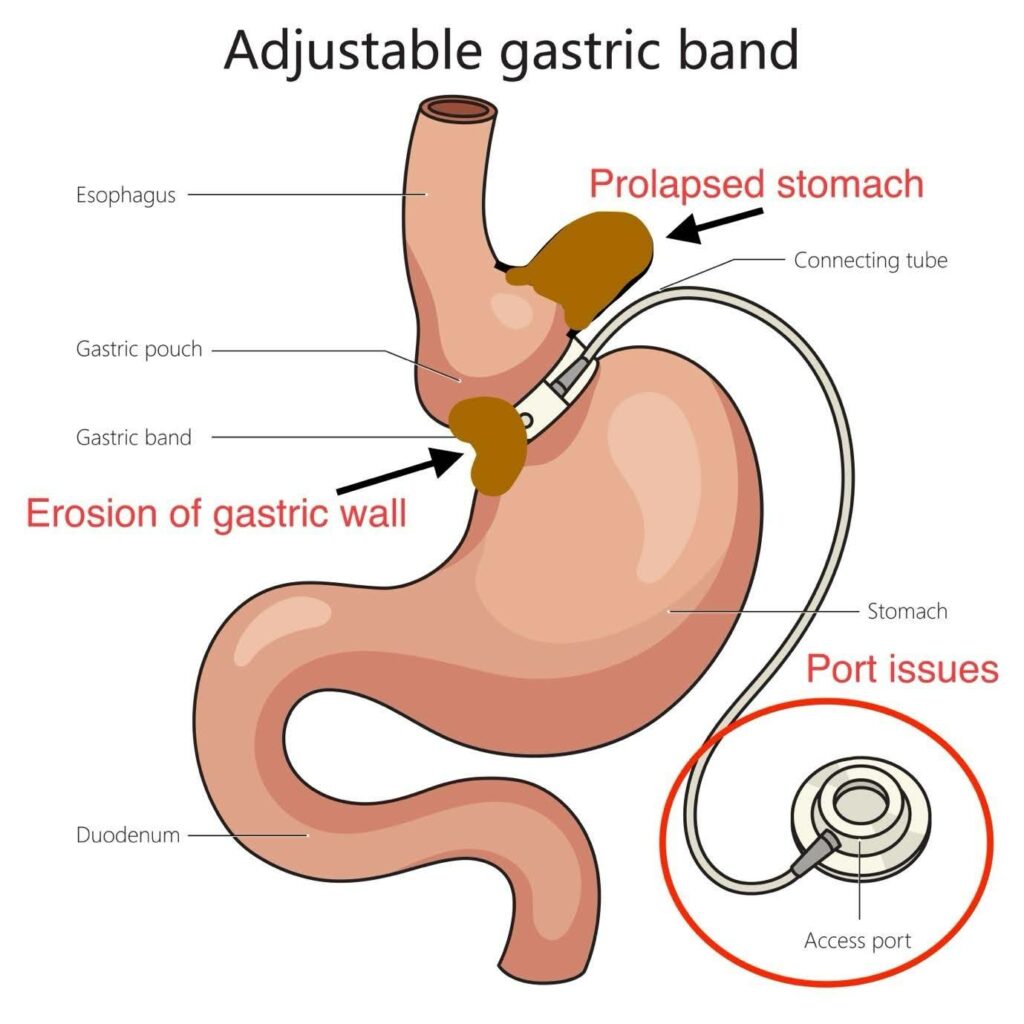
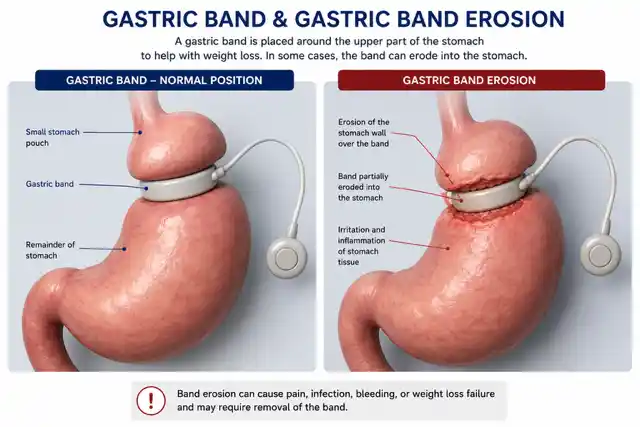
Erosion can present in different ways, including:
- Feeling less restricted, and being able to eat much more without feeling full
- Repeated infections around the port site
- Ongoing discomfort in your abdomen
- Dark or tarry stools, which can be a sign of bleeding
- Unexplained weight regain
- Nausea or vomiting
- Fluid leaking from the band system
- No symptoms at all — sometimes erosion is only found by chance during an endoscopy for another reason
How Is It Diagnosed?
The most reliable way to confirm band erosion is with an endoscopy — a procedure that allows a doctor to look directly inside your stomach with a small camera.
Treatment
If erosion is confirmed, the band will need to be removed, either surgically or endoscopically, depending on your individual case. In some cases, additional repair surgery may also be needed to fix any damage to the stomach wall.
Gastric Band Removal
When Is Gastric Band Removal Recommended?
Removing a gastric band is usually recommended when complications keep happening, or when the band is no longer helping with weight management. Common reasons for removal include:
- Ongoing or severe vomiting
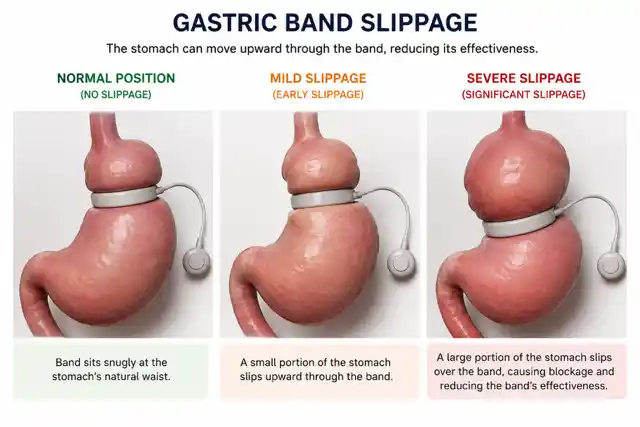
- Band slippage or erosion
- Persistent reflux or inflammation of the food pipe (oesophagitis)
- A mechanical fault with the band, port, or tubing
- Poor weight loss or regaining weight
- Struggling to tolerate the band, or it is affecting your quality of life
Removing the band at the right time helps prevent further damage to your stomach and food pipe, so it’s better not to leave problems unaddressed.
What Happens During Gastric Band Removal Surgery?
Band removal is usually carried out as keyhole (laparoscopic) surgery under general anaesthetic. During the procedure, the surgeon removes the band itself, along with the port and connecting tubing, and restores your stomach to its normal shape.
Depending on your situation, this may be:
- A standalone procedure, with nothing else done at the same time, or
- Combined in a later stage with conversion surgery, such as a gastric sleeve or gastric bypass, if this is suitable for you
Your surgeon will recommend the best approach based on your symptoms, your stomach’s condition, and any previous complications.
Risks of Procedure to Be Aware Of
Band removal is generally a safe procedure, but as with any surgery, there are some risks to consider:
- Bleeding or infection
- Injury to the stomach or food pipe (rare)
- Scar tissue or adhesions forming
- Regaining weight if no further weight loss plan is in place
Your surgical team will take steps to minimise these risks and will guide you on appropriate follow-up care.
Recovering After Band Removal
Recovery is usually faster and easier than your original band surgery:
- Most patients go home the same day, or after one night in hospital
- You’ll gradually return to a normal diet, following your care team’s guidance
- Some bloating or discomfort is normal in the first few days
- Most people return to daily activities within 1–2 weeks
If you’re having a conversion procedure (such as a sleeve or bypass) afterwards, your recovery will follow the usual guidelines for that type of bariatric surgery instead.